Category: SEO

  • Midnight Rankings: Late-Night SEO Strategies That Actually Work

    Midnight Rankings: Late-Night SEO Strategies That Actually Work

    Introduction: Working for Midnight Rankings

    Taylor’s Midnights is about reflection, late-night thoughts, and the secrets that surface in quiet hours. SEO has its own “midnight” side. The strategies that actually move the needle are often not flashy or trending. They are the quiet, behind-the-scenes efforts that pay off when everyone else is asleep.

    I’m Shrikant Bodke, a web developer and SEO-focused digital marketer with six years of experience helping businesses across global markets, including India and the UK, achieve sustainable rankings. I know the late-night grind of fixing performance issues, writing blogs, or analyzing rankings. This guide is about those midnight SEO strategies that work anywhere in the world and how you can use them to keep your site visible.

    Strategy 1: Optimize Technical SEO

    Technical SEO is the backbone of rankings. Without it, your site cannot perform, no matter how good the content is.

    Late-night checklist:

    • Crawl your site with Screaming Frog or Ahrefs.
    • Fix broken links and unnecessary redirects.
    • Clean up duplicate pages.
    • Add structured data to blogs and service pages.

    Example: In my blog Shake It Off or Step It Up: The Future of SEO, I explained why technical foundations matter. Without them, other strategies will not stick.

    Strategy 2: Update Old Content

    Sometimes, your biggest win is not new content but what you already have. Google rewards freshness.

    Midnight task:

    • Review top-performing blogs.
    • Update stats, links, and keywords.
    • Add new sections if needed.
    • Refresh the publish date if appropriate.

    Example: A client’s blog in India doubled its traffic when I updated FAQs and snippets. But I have seen the same result in UK projects where old service pages were refreshed. Freshness works globally.

    Strategy 3: Build Smarter Internal Linking

    Internal links quietly tell Google which pages matter most.

    Midnight action:

    • Link new blogs to cornerstone posts.
    • Use descriptive anchor text.
    • Connect related posts to build topic clusters.

    Example: This blog connects directly to Shake It Off or Step It Up: The Future of SEO. Together, they form a stronger SEO cluster.

    Strategy 4: Focus on User Intent

    Late-night SEO is not about tricks. It is about clarity. If your content does not meet user intent, it will not rank.

    Ask yourself:

    • Does this blog answer the question my audience is asking?
    • Is it written in the way they would search or speak?
    • Does it provide more depth than competitors?

    Example: In Speak Now: Voice Search SEO and the Future of Digital Marketing, I explained how conversational queries shape intent. Optimizing for intent is how you win midnight rankings worldwide.

    Strategy 5: Improve Site Speed and Core Web Vitals

    Performance is one of the strongest ranking signals, and midnight is the perfect time to test it.

    Midnight fixes:

    • Compress images with WebP.
    • Enable caching and use a CDN.
    • Minify CSS and JS.
    • Check Core Web Vitals in Google PageSpeed Insights.

    For a full guide, read Why Web Performance Matters and How to Make Your Site Faster (Swift-ly!).

    Strategy 6: Reputation and Reviews

    SEO is not just about code or keywords. It is also about trust. Reviews and reputation can quietly make or break rankings.

    Midnight action:

    • Monitor Google Business Profile reviews.
    • Respond professionally to feedback.
    • Add testimonials to your site.
    • Build digital PR opportunities.

    More on this in Reputation and Rankings: Managing Your Online Presence Like a Pop Star.

    Strategy 7: Create Evergreen Content

    Trends fade quickly, but evergreen content keeps working. Midnight is the perfect time to think long-term.

    Examples of evergreen content:

    Evergreen posts anchor your site and feed future rankings.

    Regional SEO Nuances (India, UK & Beyond)

    SEO principles are global, but regional nuances matter.

    • India: Performance optimization and multilingual SEO (Hindi, Marathi, Tamil, etc.) can unlock untapped traffic. Voice search in regional languages is growing fast.
    • UK: Authority, trust, and digital PR are vital. Reviews, consistent content updates, and structured data help win credibility.
    • Other Markets: In the US, competition means niche targeting is crucial. In Europe, hreflang and cultural relevance boost results.

    No matter where you are, the midnight strategies above adapt to your market.

    Real-World Results

    • An Indian client regained page one rankings by updating outdated blogs, improving Core Web Vitals, and adding FAQs.
    • A UK business boosted click-through rates by encouraging customer reviews and implementing schema markup.
    • A US startup gained organic visibility by creating evergreen topic clusters supported by internal linking.

    Conclusion: Midnight Work, Daytime Results

    Midnight SEO is about consistency, patience, and quiet effort. Fixing technical issues, updating content, building clusters, and managing reputation may not be glamorous, but they deliver results.

    Taylor’s Midnights reminds us that clarity often comes in quiet moments. Apply the same to your SEO. Put in the midnight work now, and you will wake up to rankings that actually last.

    Want midnight rankings that last?

    I help businesses in India, the UK, and worldwide implement strategies that work quietly but deliver powerful results. Explore my SEO and digital marketing services and let us build a plan that keeps your site climbing, day and night.
  • Shake It Off or Step It Up: The Future of SEO

    Shake It Off or Step It Up: The Future of SEO

    Introduction: Letting Go and Leveling Up

    Taylor’s Shake It Off is all about ignoring what does not serve you and focusing on what really matters. That is exactly how SEO feels in 2025. Some practices that once worked are now dragging websites down. Others are becoming more important than ever, and businesses need to step up if they want to stay visible.

    I am Shrikant Bodke, a web developer and SEO-driven digital marketer with six years of experience helping businesses worldwide, including India and the UK. Over the years, I have seen SEO shift from keyword stuffing to AI-powered insights. In this blog, I will break down which outdated strategies you should shake off and which to step up if you want your site to shine in the future of search.

    What to Shake Off

    Just like Taylor leaves behind the critics, you need to leave behind SEO practices that no longer work.

    1. Keyword Stuffing

    Repeating the same keyword again and again does not improve rankings. It only makes content awkward and unreadable.

    Better: Focus on topic clusters and related keywords. For example, instead of forcing “SEO services India” into every line, create a cluster with supporting blogs like You Belong With SEO: How to Build Long-Lasting Google Rankings.

    2. Thin Content

    Short, shallow blogs may fill up your site but they will not impress Google or your readers.

    Better: Write blogs that go deep into a topic. Aim for 1200–1500 words with real insights. If you need help, read my guide on From Blank Space to Page One: Crafting SEO-Friendly Blogs.

    3. Buying Backlinks

    Once upon a time, buying cheap backlinks was a quick win. Now it is a fast way to get penalized. Google’s algorithms are smarter than ever at spotting manipulative link-building.

    Better: Earn backlinks naturally with guest posting, case studies, or original research that others want to reference.

    4. Ignoring Mobile Experience

    Mobile-first indexing has been around for years, yet some websites are still not mobile-friendly. In India and the UK, where most users search on mobile, this is a huge mistake.

    Better: Use responsive layouts built for smaller screens. My post Master Responsive Design in 2025 with CSS Subgrid & Fluid Containers shows how to create modern, adaptable designs.

    What to Step Up

    If you want your site to stand tall, these are the strategies to double down on.

    1. Voice Search Optimization

    Voice search is growing fast. People are asking questions out loud instead of typing.

    Step Up: Optimize for conversational queries with FAQs and local keywords. My blog Speak Now: Voice Search SEO and the Future of Digital Marketing explains how to adapt.

    2. AI in SEO

    Artificial intelligence is no longer optional. From keyword research to on-page optimization, AI is shaping the way we do SEO.

    Step Up: Use AI tools to speed up research and automate repetitive tasks, but keep creativity human. I explained this in AI in Web Development: Saving Time and Helping Us Focus on What Matters.

    3. Core Web Vitals and Performance

    Speed and stability are critical. If your site loads slowly or shifts as it loads, both users and Google will leave.

    Step Up: Audit your site with Google PageSpeed Insights. Compress images, enable caching, and use lightweight code. My blog Why Web Performance Matters and How to Make Your Site Faster (Swift-ly!) gives a step-by-step plan.

    4. Reputation and Trust Signals (E-E-A-T)

    Google values Experience, Expertise, Authoritativeness, and Trustworthiness. Your online reputation is now directly tied to rankings.

    Step Up: Encourage positive reviews, showcase expertise with blog posts, and use digital PR. For more, read Reputation and Rankings: Managing Your Online Presence Like a Pop Star.

    5. Content Clusters and Interlinking

    Google rewards sites that show topical depth. Instead of scattered blogs, build clusters around cornerstone posts.

    Step Up: Interlink your blogs into clusters. For example, The Archer’s Guide to Content Marketing: Aim Your Words to Convert connects naturally to SEO content and strategy.

    Regional SEO Nuances

    • India: SEO here is heavily driven by mobile searches and multilingual queries. Optimizing for voice and regional languages gives businesses an edge.
    • UK: The focus is more on authority and trust. Building reputation with consistent branding, reviews, and thought leadership is key.
    • Global: No matter where you operate, the principles of speed, trust, and value remain universal.

    Real-World Stories

    A client in India was publishing lots of short blogs stuffed with keywords. They thought more posts meant more rankings. We built a strategy around long-form, intent-based content and optimized for voice search. Within four months, their organic traffic increased by 70 percent.

    In the UK, a client had ignored Core Web Vitals. Their site looked good on desktop but was slow on mobile. After fixing performance issues, cleaning up code, and adding structured data, they regained their rankings and improved conversions.

    A US-based startup focused on backlinks but ignored user intent. By shifting to a content cluster strategy and speeding up their site, they began ranking for competitive terms within six months.

    Conclusion: The Future of SEO is Balance

    SEO in 2025 is about balance. Shake off outdated tactics like keyword stuffing, thin content, and manipulative backlinks. Step up strategies that align with how people actually search today: conversational queries, AI-driven insights, faster websites, stronger reputations, and connected content clusters.

    Taylor’s Shake It Off reminds us not to waste energy on what holds us back. The same applies here. Drop what is outdated, step into the future, and your website will keep dancing on Google’s first page.

    Ready to step into the future of SEO?

    I help businesses in India, the UK, and worldwide shake off outdated tactics and step up strategies that actually work. Explore my SEO and digital marketing services and let us build a plan that keeps your site visible today and tomorrow.

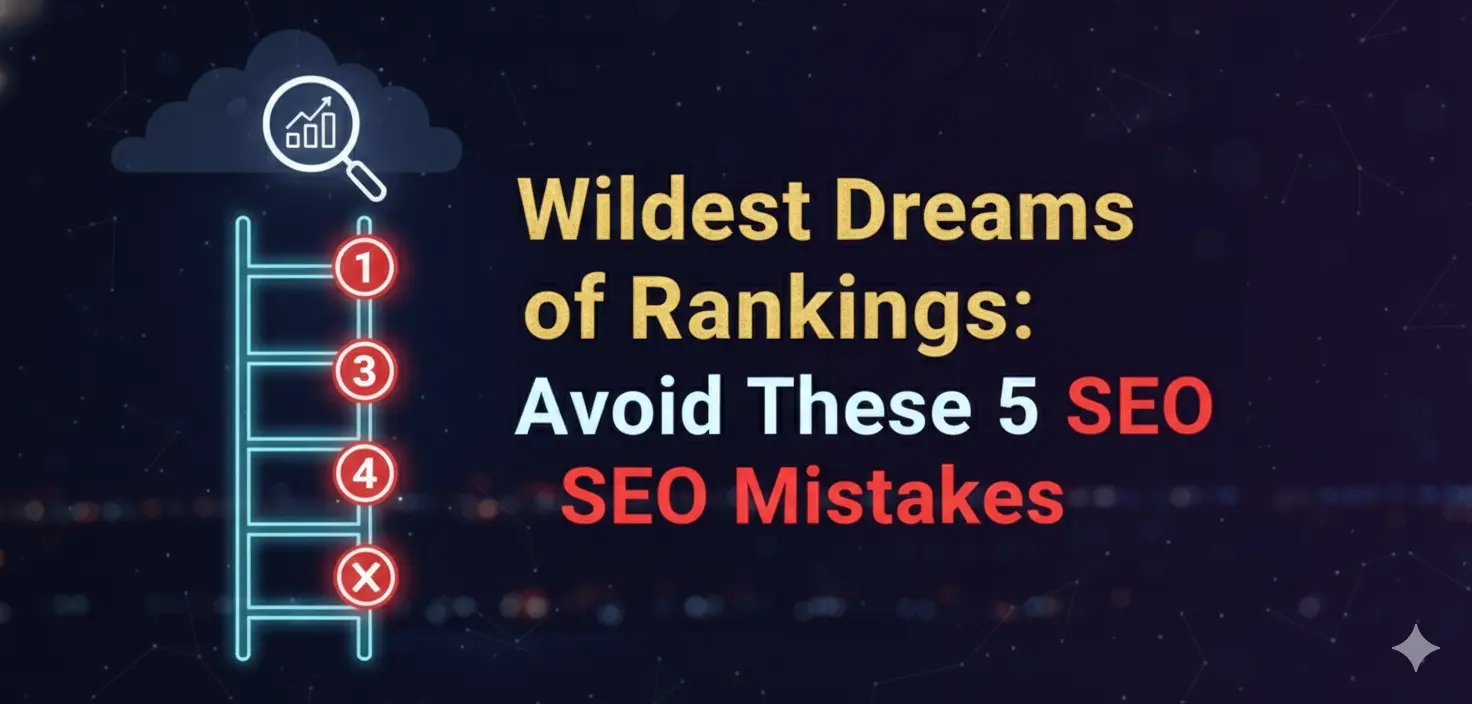
  • Wildest Dreams of Rankings? Avoid These 5 SEO Mistakes

    Wildest Dreams of Rankings? Avoid These 5 SEO Mistakes

    Introduction: Keeping Rankings From Slipping Away

    Taylor sang in Wildest Dreams, “Say you’ll remember me, standing in a nice dress, staring at the sunset.” That feeling of wanting to be remembered is the same dream every business has for its website — to stand tall on Google’s first page, shining in front of the right audience.

    But here is the truth: those wildest dreams of rankings can vanish if you make avoidable SEO mistakes. I have seen businesses invest in design, ads, and content, only to lose visibility because of small but critical errors.

    I am Shrikant Bodke, a web developer and SEO-driven marketer with six years of experience working with businesses in India and the UK. In this blog, I will walk you through the five most common SEO mistakes in 2025 and how to fix them so your rankings don’t fade like a forgotten chorus.


    Mistake 1: Ignoring Voice Search and Conversational Queries

    With voice assistants like Siri, Alexa, and Google Assistant becoming part of daily life, voice search is reshaping how people find information. Yet many businesses still optimize only for short, typed keywords.

    👉 Example: A typed query might be “SEO consultant UK.” A voice query could be “Who is the best SEO consultant near me?”

    How to fix it:

    • Add FAQs to your site with conversational queries.
    • Write content that answers natural questions.
    • Optimize for local searches so you appear in “near me” results.

    For a deeper dive, read my blog Speak Now: Voice Search SEO and the Future of Digital Marketing.


    Mistake 2: Slow Websites That Push Visitors Away

    A slow site can ruin the user experience and hurt your rankings. Most people will not wait longer than three seconds for a page to load. Google also rewards faster sites through Core Web Vitals.

    How to fix it:

    • Compress and optimize images.
    • Use caching and a CDN.
    • Minify CSS and JavaScript.
    • Invest in good hosting.

    👉 To learn practical steps, check out Why Web Performance Matters and How to Make Your Site Faster (Swift-ly!).


    Mistake 3: Publishing Content Without User Intent

    Content that looks good but does not match user intent will not rank or convert. Many businesses make the mistake of publishing for keywords instead of people.

    How to fix it:

    • Focus on solving problems your audience actually cares about.
    • Create long-form blogs that go deep into a topic.
    • Balance evergreen content with trend-driven topics.

    👉 For guidance, see my blogs From Blank Space to Page One: Crafting SEO-Friendly Blogs and The Archer’s Guide to Content Marketing: Aim Your Words to Convert.


    Mistake 4: Forgetting About Reputation

    Google is not only checking your keywords and site speed. It also looks at your reputation. Negative reviews, weak branding, or lack of trust signals can pull down your rankings.

    How to fix it:

    • Ask satisfied clients to leave reviews.
    • Respond to negative feedback professionally.
    • Build authority with thought leadership and personal branding.

    👉 My blog Reputation and Rankings: Managing Your Online Presence Like a Pop Star explains how reputation directly ties into SEO.


    Mistake 5: Neglecting Mobile and Responsive Design

    Most users in India and the UK search on mobile devices. If your site is not responsive, you lose both users and rankings.

    How to fix it:

    • Test your site on multiple devices.
    • Use CSS grid and subgrid for modern responsive layouts.
    • Keep navigation simple and mobile-friendly.

    👉 For more, read Master Responsive Design in 2025 with CSS Subgrid & Fluid Containers.


    Bonus Mistake: Ignoring Technical SEO

    Technical SEO issues are often hidden but deadly. Broken links, missing schema, poor site architecture, and unoptimized meta tags silently harm rankings.

    How to fix it:

    • Run regular audits with Ahrefs or SEMrush.
    • Fix redirects and broken links.
    • Use schema markup on blogs and services.
    • Keep your XML sitemap updated.

    Real-World Example: Fixing Mistakes for Growth

    I once worked with a business in India that had a beautiful website but very little traffic. An audit revealed slow load times, no mobile optimization, and thin content. After fixing performance issues, optimizing for conversational keywords, and adding structured blogs, traffic increased by 65 percent in three months.

    In the UK, a client struggled with poor reviews and weak local SEO. By updating their Google My Business profile, encouraging positive reviews, and targeting location-specific searches, their inquiries doubled.


    Conclusion: Achieving Your Wildest Dreams of Rankings

    Ranking high on Google should not just be a wild dream. It can be your reality if you avoid these mistakes. Focus on voice search, speed, intent-driven content, reputation, and mobile design. Keep technical SEO in check, and you will see steady growth.

    Taylor’s Wildest Dreams reminds us that moments can be fleeting. Do not let your SEO rankings slip away the same way. Act now, avoid mistakes, and keep your business shining in search results.

    Ready to turn your wildest dreams of rankings into reality?

    I help businesses in India and the UK avoid SEO mistakes, strengthen their strategies, and build websites that rank and convert. Check out my SEO and digital marketing services and let us create a plan that keeps your site shining on Google.

  • Speak Now: Voice Search SEO and the Future of Digital Marketing

    Speak Now: Voice Search SEO and the Future of Digital Marketing

    Introduction: When Search Finds Its Voice

    Taylor’s Speak Now was all about saying what you feel before the moment slips away. In the digital world, people are doing exactly that. Instead of typing, they are speaking their searches. “Hey Google, where’s the best café near me?” or “Alexa, play Taylor Swift’s latest track.” Voice search has moved from novelty to habit.

    As voice assistants like Siri, Alexa, and Google Assistant become part of daily life, the way people search is changing. That shift has huge implications for SEO and digital marketing.

    I am Shrikant Bodke, a web developer and SEO-driven marketer with six years of experience helping businesses in India and the UK stay ahead of digital changes. I have seen how quickly search behaviors evolve, and voice search is one of the biggest shifts happening right now. Let us look at what it means for your website and how to prepare for this future.


    Why Voice Search Matters

    Voice search is not just a passing trend. It is becoming a primary way people interact with technology.

    • Convenience: Speaking is faster than typing.
    • Mobile-first world: With smartphones in every hand, voice search is the natural extension.
    • Smart speakers: Devices like Amazon Echo and Google Nest are becoming household essentials.
    • Local intent: Most voice searches are about local queries like “restaurants near me” or “SEO services in London.”

    In both India and the UK, voice usage is rising. For India, this includes multilingual searches in Hindi, Marathi, and other local languages. For the UK, it reflects busy lifestyles where people rely on hands-free help.


    How Voice Search Changes SEO

    Traditional SEO focuses on typed queries. Voice search changes the game.

    1. Conversational Keywords
      People speak differently than they type. Instead of typing “best SEO consultant UK”, they say “Who is the best SEO consultant near me?”
    2. Question-Based Searches
      Voice queries often start with “who,” “what,” “where,” “when,” or “how.”
    3. Local Focus
      Many voice searches are location-specific, making local SEO critical.
    4. Featured Snippets
      Voice assistants often read out the featured snippet. If you win that position, your brand becomes the spoken answer.

    How to Optimize for Voice Search

    1. Focus on Conversational Keywords

    Think about the way people speak. Create content around natural language queries.

    Example: Instead of targeting “SEO tools”, aim for “What are the best SEO tools for small businesses?”

    👉 Tip: Use FAQs on your site to naturally include conversational queries.

    If you are building content for voice search, your blogs need to be structured for clarity and depth. A good example is how I explained blog writing in From Blank Space to Page One: Crafting SEO-Friendly Blogs. When your blogs are SEO-friendly, they are more likely to show up as the answer to voice queries.

    The heart of voice search optimization is understanding how people speak, not just how they type. This overlaps with content marketing. In The Archer’s Guide to Content Marketing: Aim Your Words to Convert, I explained how choosing the right words builds trust and conversions. That same approach helps your content become the natural spoken answer.

    2. Optimize for Local SEO

    • Claim and update your Google My Business profile.
    • Include location-specific keywords like “SEO services in Mumbai” or “SEO consultant in Manchester.”
    • Encourage reviews, since they often appear in voice results.

    3. Aim for Featured Snippets

    Write clear, concise answers to common questions. Voice assistants often pull from these.

    Example: If someone asks “How do I speed up my WordPress site?”, your blog on Why Web Performance Matters and How to Make Your Site Faster (Swift-ly!) could become the answer.

    Voice assistants often pull their answers from featured snippets. To consistently earn that spot, you need a solid SEO foundation. My blog You Belong With SEO: How to Build Long-Lasting Google Rankings explains the strategies that keep your site steady at the top and make your content a reliable source for voice search results.

    4. Improve Mobile and Site Speed

    Voice search is heavily mobile-driven. A slow site will not show up in results. For optimization, see my guide on 5 Must-Have Plugins for Performance-First WordPress Development.

    Most voice searches happen on mobile, which means responsive design plays a huge role in visibility. If your site is not adaptable, you risk losing that traffic. In Master Responsive Design in 2025 with CSS Subgrid & Fluid Containers, I explained how new CSS features help create layouts that are fast, fluid, and future-ready, perfectly aligning with voice-first browsing.

    5. Create Structured Content with Schema

    Add schema markup to help Google understand your content better. FAQ schema works especially well for voice queries.


    AI and Voice Search

    AI powers most voice assistants. As AI improves, voice search will become even more accurate and contextual.

    I have already shared in AI in Web Development: Saving Time and Helping Us Focus on What Matters and How AI Tools Are Transforming Software Development? how AI is transforming digital workflows. The same applies here. Voice search relies on AI to understand intent, accents, and languages. Businesses that adapt early will have the edge.


    Real-World Example: Voice Search in Action

    One of my clients in India runs a local service business. Many leads now come from queries like “AC repair near me.” By optimizing their Google My Business, adding FAQs, and including local language content, we improved their chances of being the spoken answer.

    In the UK, a client targeting “SEO consultant London” benefited from optimizing for questions like “Who is the best SEO consultant in London?” They started showing up in snippets and winning more local inquiries.


    The Future of Digital Marketing with Voice Search

    Voice search is not replacing traditional SEO. It is expanding it. The future will combine text, voice, and even visual search. Businesses that integrate all three will dominate.

    Imagine this: a user asks Alexa for “SEO consultant near me,” clicks your site on mobile, and then watches your video on YouTube. That is a connected strategy, and it is where digital marketing is headed.

    Voice search is part of a bigger SEO journey. To stay visible, you cannot rely on quick wins. I wrote about this in You Belong With SEO: Making Sure Google Can’t Shake You Off, where I shared how to stay resilient against algorithm changes and keep your rankings safe. The same long-term mindset applies when adapting to voice search.


    Conclusion: Speak Now, Be Heard Tomorrow

    Voice search is changing how people interact with the web. To stay visible, you need to adapt. Focus on conversational queries, strengthen local SEO, target featured snippets, and keep your site fast and mobile-friendly.

    Taylor’s Speak Now reminds us to take the chance before it is gone. The same applies here. If you want your brand to be heard in the future of search, the time to act is now.

    Want to prepare your website for the future of search?

    I help businesses in India and the UK optimize for SEO, content, and digital growth. If you want to be the answer when customers ask their voice assistants, explore my SEO and digital marketing services and let us get started.

  • All Too Well (10-Minute Version) of Social Media Strategy That Still Works

    All Too Well (10-Minute Version) of Social Media Strategy That Still Works

    Introduction: Social Media That Stays Timeless

    Taylor’s All Too Well (10-Minute Version) is proof that some things never lose their impact. In the same way, a strong social media strategy focuses on timeless principles that keep delivering results no matter how trends or algorithms change.

    The problem many businesses face is chasing every new trend and ending up with no clear direction. Instead, you need a strategy that stays true to your brand, resonates with your audience, and keeps delivering results even as trends change.

    Hi, I am Shrikant Bodke, a web developer and SEO-driven digital marketer with six years of experience working with businesses in India and the UK. I have built strategies that boosted brand visibility, generated leads, and kept social communities engaged long after the hype of a trend faded. Let us look at the strategies that still matter in 2025.


    Why Social Media Still Matters in 2025

    Some believe social media is saturated. The truth is, it is still one of the most powerful tools for:

    • Brand visibility: People spend hours daily on platforms.
    • Engagement: Conversations build relationships and loyalty.
    • SEO support: Social shares and signals boost authority.
    • Lead generation: Platforms like LinkedIn and Instagram can drive inquiries directly.

    Think of social media as your concert stage. The audience may change, the setlist may shift, but the energy of connection remains timeless.


    Step 1: Know Your Audience Like Lyrics

    Taylor’s lyrics resonate because they speak directly to listeners’ emotions. Your social media content should do the same.

    Tips:

    • Define audience personas. Are they professionals on LinkedIn, or consumers scrolling Instagram?
    • Study analytics. Look at which posts get engagement and why.
    • Speak your audience’s language. Avoid jargon if they do not use it.

    Example: A B2B brand in the UK should focus on LinkedIn thought leadership. A local café in India should post Instagram reels showing daily specials and behind-the-scenes moments.


    Step 2: Create Content That Hits Emotion

    Great social content is more than promotion. It is about creating a connection that feels authentic and memorable.

    Content types that work:

    • Educational posts: Share tips that solve real problems.

    • Behind-the-scenes: Let people see the humans behind the brand.

    • User-generated content: Testimonials and customer stories that build trust.

    • Trends with a twist: Use trending audio or formats, but make them relevant to your brand story.

    Taylor’s All Too Well connects because it carries raw emotion. Your content should do the same, speaking to your audience’s needs, struggles, or aspirations.

    If you want to go deeper into how to write content that truly converts, my blog on The Archer’s Guide to Content Marketing: Aim Your Words to Convert breaks down how storytelling, empathy, and strong calls-to-action can take your content beyond likes and into meaningful business growth.


    Step 3: Balance Evergreen With Trends

    Not every post should chase the latest trend. Balance evergreen content that stays relevant with trend-based content for reach.

    • Evergreen: “How to Choose the Right SEO Consultant”
    • Trend: A quick reel using the latest audio trend but tied to your services.

    This mix ensures your feed does not age too quickly while still staying relevant.


    Step 4: Use the Right Platforms for the Right Message

    Every social platform has its own vibe and audience. Success comes from matching your content style to the platform.

    • LinkedIn: Best for professional credibility, thought leadership, and B2B lead generation.

    • Instagram: Great for visuals, reels, and storytelling that builds brand personality.

    • Twitter/X: Works well for real-time updates, industry commentary, and authority building.

    • Facebook: Still useful for communities and local engagement.

    • YouTube: Perfect for tutorials, deep dives, and long-form storytelling.

    If you are developing your website alongside your social presence, it also helps to use the latest web technologies that support engagement. My guide on HTML5 Updates You Should Actually Use: Simple Wins for Better Web Projects explains small but powerful updates that make websites smoother, more interactive, and social-media-ready with embedded videos and rich media.


    Step 5: Optimize for Engagement and SEO

    Social media is not separate from SEO. They work together.

    Tips to optimize:


    Step 6: Be Consistent Like an Era Tour

    One viral post does not build a brand. Consistency is what wins.

    • Plan a content calendar.
    • Post at the best times for your audience.
    • Keep the visual style consistent.
    • Use scheduling tools like Buffer or Hootsuite.

    Taylor does not just release one song and vanish. She creates eras with a clear theme. Your social media should feel the same way.


    Step 7: Monitor, Measure, Adjust

    Without measurement, you are just guessing.

    Metrics to track:

    • Engagement rate (likes, comments, shares).
    • Reach and impressions.
    • Click-through rates to your site.
    • Leads or conversions generated.

    Tools like Meta Business Suite, LinkedIn Analytics, and Google Analytics help you see what works and adjust.


    Step 8: AI in Social Media Strategy

    AI is reshaping how brands approach social media. It can suggest trending topics, generate captions, analyze engagement patterns, and even recommend the best posting times. This saves hours of manual work and helps you focus on creativity.

    But AI alone cannot carry your strategy. Authenticity still matters most. Audiences can feel when something is robotic. The best approach is to let AI handle repetitive tasks while you focus on connection, storytelling, and originality.

    I explained this in detail in AI in Web Development: Saving Time and Helping Us Focus on What Matters, where I shared how automation frees us from routine so we can focus on strategy. For businesses looking to simplify workflows even further, The Rise of Low-Code & No-Code Tools in Web Development shows how non-technical teams can quickly build tools, landing pages, and automations without coding. Both AI and no-code tools can support your social media plan by giving you more time to be creative and consistent.


    Real-World Example: Social Media That Worked

    A client in India was struggling with low engagement. We created a mix of educational reels, customer stories, and trend-based posts. Within two months, their reach doubled, and inquiries started flowing from Instagram DMs.

    In the UK, a B2B firm leveraged LinkedIn articles and thought leadership posts. They began attracting direct messages from potential clients, which turned into contracts.

    The strategy was not complicated. It was about understanding their audience and showing up consistently.


    Conclusion: Strategy That Lasts All Too Well

    Trends will come and go. Algorithms will shift. But the foundations of social media strategy knowing your audience, creating valuable content, staying consistent, and optimizing for engagement will always matter.

    Take inspiration from All Too Well. Long, detailed, and emotional, it still connects deeply years later. Build your social media with the same intention, and your brand will keep resonating with audiences no matter how the platforms evolve.

    Scrolling through tips is great, but applying them can feel overwhelming. That is where I step in. Check out my services page and let’s work together to make your brand’s online presence stronger.

  • Reputation and Rankings: Managing Your Online Presence Like a Pop Star

    Reputation and Rankings: Managing Your Online Presence Like a Pop Star

    Introduction: Your Reputation Is Your Stage

    Taylor’s Reputation era proved something powerful. In music, in business, and on the internet, reputation is everything. A single narrative can build you up or tear you down. The same applies to your online presence.

    Today, when someone searches your name or business, what they see shapes how they trust you. Your rankings and your reputation are deeply connected. Managing both is the key to long-term success online.

    I am Shrikant Bodke, a web developer and SEO-driven marketer with six years of experience working with businesses in India and the UK. I have seen firsthand how a strong online presence helps companies stand tall, and how neglecting reputation can cost them opportunities. In this guide, let us talk about how to manage your online reputation like a pop star and keep your rankings shining.


    Why Reputation Matters for SEO

    Your reputation is not just about reviews. It directly influences SEO and conversions.

    • Trust signals: Google favors businesses with positive mentions, reviews, and authority links.
    • Click-through rate: People are more likely to click when they recognize and trust a brand.
    • Conversions: A good reputation builds confidence, turning visitors into customers.
    • Long-term growth: A strong reputation means even if competitors rise, your presence stays steady.

    Think of it as your public image. If Taylor Swift can redefine her narrative and win even more fans, your brand can do the same with the right strategy.


    Step 1: Audit Your Online Presence

    Before you improve your reputation, you need to know what exists already.

    Checklist:

    • Google your name and business. What appears in the first two pages?
    • Check reviews on platforms like Google My Business, Trustpilot, or Glassdoor.
    • Analyze your social media mentions.
    • Review backlinks and citations with tools like Ahrefs or SEMrush.

    👉 If negative or outdated results dominate, you have work to do. If positive and consistent results appear, your goal is to strengthen them.


    Step 2: Build a Personal Brand That Stands Out

    Reputation and personal branding go hand in hand. The more consistent and authentic you are, the more people trust you.

    Tips for building your brand:

    • Create content that reflects your expertise. Example: my blog on From Blank Space to Page One: Crafting SEO-Friendly Blogs.
    • Share personal insights on LinkedIn to connect with professionals.
    • Use a professional website with updated case studies, testimonials, and blogs.
    • Stay consistent across platforms with the same bio, image, and tone.

    If you want to understand how content can position you as an authority, my post The Archer’s Guide to Content Marketing: Aim Your Words to Convert explains how to create content that connects with the right audience.


    Step 3: Use Digital PR to Boost Authority

    Pop stars build their reputation with media coverage. Brands can do the same with digital PR.

    Ideas:

    • Write guest posts for reputable industry sites.
    • Get featured in interviews or expert roundups.
    • Share original data or case studies that others want to reference.
    • Issue press releases for big company updates.

    External mentions build authority and improve rankings.

    AI is also reshaping how we create and manage content. In my blog on AI in Web Development: Saving Time and Helping Us Focus on What Matters, I explained how automation helps free up time for strategies like digital PR and branding.


    Step 4: Manage Reviews Proactively

    Reviews are modern-day fan feedback. Responding to them shapes how others see you.

    Best practices:

    • Encourage satisfied clients to leave reviews on Google, Clutch, or Trustpilot.
    • Respond professionally to negative reviews instead of ignoring them.
    • Use reviews in your content as testimonials.

    📌 Example: A client of mine in the UK saw a big increase in leads after we encouraged their happy customers to leave Google reviews. Within weeks, their star rating went up, and so did their search visibility.


    Step 5: Control the First Page of Google

    The goal of reputation management is to own your first page of search results.

    Ways to achieve this:

    • Publish consistent blog content targeting your name and services.
    • Optimize social media profiles so they appear in searches.
    • Get listed in directories relevant to your industry and location.
    • Interlink your blogs, such as connecting this one with You Belong With SEO: How to Build Long-Lasting Google Rankings.

    When someone Googles you, every result should reflect your expertise and credibility.


    Step 6: Crisis Management: When Things Go Wrong

    Every pop star faces criticism. The key is how they respond.

    If negative content or reviews appear:

    • Respond quickly and professionally.
    • Push positive content to outrank the negative.
    • Use SEO to strengthen pages you control.
    • Avoid online fights that damage trust further.

    Remember: a bad review is not the end. How you handle it matters more.


    Step 7: AI and Online Reputation

    AI is becoming part of reputation management too. It can:

    • Monitor brand mentions across the web.
    • Analyze sentiment in reviews and social media.
    • Suggest responses or content ideas.

    I explored this trend in AI in Web Development: Saving Time and Helping Us Focus on What Matters and How AI Tools Are Transforming Software Development. Just like in web development, AI can save time in monitoring, but the human touch is essential when it comes to responses.


    Real-World Example: Reputation Saved

    I worked with a client in India whose brand was struggling with outdated negative reviews. We built a fresh content strategy, optimized their Google My Business, encouraged positive reviews, and published thought leadership blogs. Within six months, their search results looked completely different. Positive articles and profiles replaced old negatives, and leads began flowing again.


    Conclusion: Reputation as Your Stage

    Your reputation is your stage, and your rankings are the spotlight. Together they shape how people see you. Managing both with care ensures that when someone looks you up, they see a trusted expert worth engaging with.

    Take inspiration from Taylor’s Reputation era. Reinvent your image, own your narrative, and shine brighter than the noise. With strong reputation management and SEO, your online presence will always stay in the spotlight.

    If you want expert help with building your reputation and rankings, explore my Services page. You can also check my Projects to see how I have helped businesses improve their presence and visibility.

  • Why Web Performance Matters and How to Make Your Site Faster (Swift-ly!)

    Why Web Performance Matters and How to Make Your Site Faster (Swift-ly!)

    Introduction: The Need for Speed

    Taylor sings in Style, “We never go out of style.” On the web, speed is your style. A beautiful site means nothing if it takes forever to load. Visitors today do not wait. If your site is slow, they leave, and Google notices.

    Web performance is more than just convenience. It affects your SEO, user experience, and revenue. A fast site feels smooth, trustworthy, and effortless, while a slow one frustrates users and pushes them toward competitors.

    I am Shrikant Bodke, a web developer and SEO-driven digital marketer with six years of experience optimizing websites for businesses in India and the UK. I have worked on sites where cutting load times by even two seconds increased conversions significantly. In this guide, I will show you why web performance matters and how to make your site faster, Swift-ly.


    Why Web Performance Matters

    A website is your digital stage. Performance is what keeps the audience in their seats.

    1. User Experience

    People expect sites to load within two to three seconds. A delay causes frustration, higher bounce rates, and lost trust.

    2. SEO Rankings

    Google uses Core Web Vitals as a ranking factor. Speed and responsiveness directly impact where your site appears in search results.

    3. Conversions and Sales

    Every second of delay can lower conversions. Amazon once found that an extra second of loading time could cost millions in sales. Smaller businesses face the same challenge on a different scale.

    4. Mobile Experience

    In India and the UK, mobile traffic dominates. If your site is slow on mobile, you are losing the majority of potential customers.


    How to Measure Web Performance

    Before fixing speed, you need to measure it.

    Tools I recommend:

    • Google PageSpeed Insights: Provides Core Web Vitals data and suggestions.
    • GTmetrix: Gives detailed reports on loading time and bottlenecks.
    • Pingdom: Useful for monitoring uptime and performance over time.
    • WebPageTest: Advanced insights with filmstrip views of how your site loads.

    👉 Tip: Always test your site from multiple locations to see how it performs for both Indian and UK audiences.


    Core Web Vitals Explained

    Google introduced Core Web Vitals to measure real-world performance.

    • Largest Contentful Paint (LCP): How long the main content takes to load. Aim for under 2.5 seconds.
    • First Input Delay (FID): How quickly your site responds when users interact. Aim for under 100 ms.
    • Cumulative Layout Shift (CLS): How stable your layout is. Aim for a score below 0.1.

    Improving these metrics is key to ranking and user satisfaction.


    Practical Ways to Make Your Site Faster

    Now let us dive into action.

    1. Optimize Images

    • Compress images without losing quality using tools like TinyPNG or Squoosh.
    • Use modern formats like WebP.
    • Implement lazy loading so images load only when users scroll.

    2. Minimize Code

    • Remove unnecessary JavaScript and CSS.
    • Use minification tools to shrink file sizes.
    • For WordPress, plugins like Autoptimize can handle this.

    3. Improve Hosting

    Your hosting provider plays a huge role in performance.

    • Choose a reliable host with data centers near your audience.
    • Consider CDN (Content Delivery Network) solutions like Cloudflare.

    4. Leverage Caching

    • Browser caching stores static resources locally.
    • Server-side caching speeds up repeated visits.
    • WordPress plugins like W3 Total Cache or WP Rocket are excellent options.

    5. Reduce Redirects

    Each redirect adds extra time. Keep them to a minimum.

    6. Monitor Plugins and Themes

    For WordPress users, too many plugins slow everything down. Audit your plugins and remove those you do not need. Choose lightweight themes built with performance in mind.

    If you are a WordPress user and want a deeper look at the tools that make a difference, check out my post on 5 Must-Have Plugins for Performance-First WordPress Development. These plugins can handle caching, image optimization, and speed improvements without heavy coding.


    Case Example: Cutting Load Time in Half

    One of my clients in India had a WordPress site that loaded in over seven seconds. By compressing images, enabling caching, and switching to a better host, we cut load time to under three seconds. The result was a 20 percent drop in bounce rate and more inquiries through their contact form.

    In the UK, I worked on an e-commerce site where speed was directly tied to revenue. After optimizing Core Web Vitals, their conversion rate improved by 12 percent in just a month.


    The Connection Between Speed and SEO

    Speed is not just about user experience. It is part of your SEO strategy. Google rewards fast, mobile-friendly, and stable sites. That means optimizing performance is not optional if you want lasting rankings.

    If you are building your SEO foundation, my guide on You Belong With SEO: Making Sure Google Can’t Shake You Off explains how rankings can remain steady even during algorithm updates. A fast site is part of that resilience.


    Performance for Beginners: Start with the Basics

    If you are just starting out in web development, it helps to understand how websites are structured. My blog on Web Development Basics: Beginner’s Guide to HTML, CSS & JavaScript is a good place to start. Once you know the basics, optimizing for speed will make more sense.


    AI and Performance Optimization

    AI tools are also stepping into performance. They can analyze code, compress files, and even suggest optimizations automatically. In AI in Web Development: Saving Time and Helping Us Focus on What Matters I shared how AI can save time by automating repetitive tasks, allowing developers to focus on strategy.

    Similarly, AI-driven monitoring tools can now alert you when performance drops, giving you time to fix issues before they affect rankings.


    How to Keep Performance Strong Long-Term

    Performance is not a one-time fix. It is an ongoing process.

    • Audit your site monthly with PageSpeed Insights or GTmetrix.
    • Update plugins and themes regularly.
    • Keep your content management system updated.
    • Monitor performance from both India and UK locations.

    By making speed part of your regular workflow, you ensure that your site stays fast and competitive.


    Conclusion: Make Your Site Swift-ly

    A slow site is like a missed beat in a concert. It throws everything off. A fast, smooth site keeps visitors engaged, improves SEO, and builds trust. By optimizing images, improving hosting, cleaning up code, and monitoring Core Web Vitals, you can make your website Swift-ly fast. Remember, web performance is not about flashy effects. It is about giving your visitors the smooth experience they expect. Aim for speed, and your site will never go out of style.

    For another perspective, I have also written Why Web Performance Matters and How You Can Make Your Site Faster. Think of it as a companion read that complements this guide with additional insights.

    If you want your site optimized for speed and performance without the hassle, explore my website development and SEO services. I can help make sure your website is Swift-ly fast and built to convert.

  • The Archer’s Guide to Content Marketing: Aim Your Words to Convert

    The Archer’s Guide to Content Marketing: Aim Your Words to Convert

    Introduction: Finding Your Aim

    Taylor once sang in The Archer, “I wake in the night, I pace like a ghost, the room is on fire, invisible smoke.” That is exactly how content feels when it does not connect with anyone. You put words out into the world, but if they are not aimed with precision, they disappear into the noise.

    Content marketing is not about publishing more for the sake of it. It is about aiming carefully, hitting the target, and guiding your audience toward action.

    I am Shrikant Bodke, a web developer and digital marketer with six years of experience helping businesses in India and the UK grow through SEO and content strategies. I have worked on small business blogs, enterprise content calendars, and everything in between. What I have learned is simple: content that converts is never an accident. It is the result of a clear strategy and precise execution.

    This guide is all about aiming your words so they actually convert.


    Why Content Marketing Matters More Than Ever

    In 2025, people are consuming content across more platforms than ever. Blogs, social media, newsletters, reels, and podcasts all compete for attention. Some might think content marketing is too crowded to make an impact. The truth is that good content still stands out.

    Here is why it still matters:

    • It builds trust. People buy from brands they trust, and trust comes from consistent, helpful content.
    • It drives SEO. A strong blog strategy helps you appear on Google again and again.
    • It generates leads. A blog can move someone from curiosity to booking a consultation.
    • It fuels other channels. A single blog can be repurposed into multiple posts, videos, or newsletters.

    Think of content marketing as your arrow supply. Each piece is a shot toward your audience. Some miss, some hit, but the more intentional you are, the more often you land right where it matters.


    Step 1: Know Your Target

    You cannot hit the bullseye without knowing where it is. Content marketing starts with understanding your audience.

    Ask yourself:

    • Who are they? Business owners, students, marketers, CEOs?

    • What problems keep them awake at night?

    • What questions are they typing into Google?

    • Are they just learning about their problem or ready to buy a solution?

    📌 Example: Someone in India searching “what is content marketing” is a beginner. They need education. A CEO in the UK searching “best content marketing agency UK” is at the decision stage. They need a reason to choose you.

    This is where content marketing meets the buyer’s journey. Awareness content brings people in. Consideration content nurtures them. Decision-stage content converts them.


    Step 2: Create Content That Educates and Inspires

    Once you know your target, the next step is choosing what kind of content to create. Not all content serves the same purpose.

    Types of content that work:

    • Educational blogs: Teach something useful. Example: From Blank Space to Page One: Crafting SEO-Friendly Blogs.
    • Case studies: Show proof of your work. Nothing builds credibility faster.
    • How-to guides: Step-by-step content that answers a clear question.
    • Visual content: Infographics and videos that simplify complex ideas.
    • Thought leadership: Share your perspective and insights on industry changes.

    For businesses in India and the UK, I often recommend starting with blogs and guides because they improve SEO while also building credibility. Once you have a strong library, you can expand into videos and infographics for social sharing. If you are completely new to creating content online, it also helps to understand the building blocks of the web. My post on Web Development Basics: Beginner’s Guide to HTML, CSS & JavaScript is a great starting point to learn how websites are structured and why clean code matters for SEO and content performance.


    Step 3: Write Content That Converts

    Great content informs. Content that converts does more. It builds trust, sparks interest, and nudges people toward taking action.

    Here is where conversion copywriting comes into play.

    Tips to aim your words:

    • Use clear CTAs. Every blog should tell the reader what to do next.
    • Write with empathy. Show you understand their struggles.
    • Focus on benefits, not features. Do not just say “I offer content writing services.” Instead, say “I help businesses rank higher on Google and attract more clients with SEO-driven content.”
    • Use proof. Add numbers, testimonials, or examples.

    📌 Real example: For one of my clients, we published a blog on “SEO tips for small businesses UK.” The blog ended with a simple CTA: “Book a free consultation today.” That one blog still generates leads because it educates first and sells second.

    👉 CTA for you: If you need content that converts, explore my content writing services.


    Step 4: Optimize Without Overdoing It

    Content without SEO will not be found. SEO without good writing will not be read. You need both.

    Tips for SEO-friendly content:

    If you want to go deeper into SEO strategy itself, check out You Belong With SEO: Making Sure Google Can’t Shake You Off. That article breaks down how to build rankings that stay steady even when Google updates its algorithms.


    Step 5: Repurpose and Promote Your Content

    Even the best blog is wasted if nobody sees it. Promotion is half of content marketing.

    Ways to repurpose and promote:

    • Share highlights on LinkedIn to reach professionals.
    • Turn snippets into Twitter/X threads.
    • Create a short Instagram carousel from the blog’s main points.
    • Record a quick video summary for YouTube or Reels.
    • Send the blog in your newsletter with a personal note.

    Taylor Swift does not just release a song. She performs it, promotes it, and builds an entire era around it. Treat your content the same way. Every piece deserves more than one chance to shine.


    Step 6: Track Results and Adjust Your Aim

    Content marketing is not about publishing and forgetting. You need to track results and adjust.

    Metrics to measure:

    • Traffic from organic search.
    • Average time spent on the blog.
    • Click-through rates on CTAs.
    • Conversions generated.
    • Backlinks earned.

    Use Google Analytics 4 and Search Console to track these numbers. If you notice a blog ranking for an unexpected keyword, write a supporting article. If a blog has impressions but no clicks, rework the headline and meta description.

    Content marketing is a moving target. The more you track, the better your aim becomes.


    Step 7: Use AI as an Extra Tool

    AI is reshaping content creation. It can help brainstorm topics, generate outlines, or even draft first versions. But AI cannot replace human creativity and storytelling.

    The best approach is to let AI handle the repetitive parts so you can focus on strategy and voice. I wrote more about this in AI in Web Development: Saving Time and Helping Us Focus on What Matters and How AI Tools Are Transforming Software Development. The same lessons apply here. AI is a tool, not the archer. The aim must come from you.


    Real-World Example: Content That Hit the Target

    A client in India wanted to attract leads for their e-learning platform. Instead of generic blogs, we built a series of step-by-step guides on topics their audience searched for. Each guide ended with a CTA to sign up for a free demo. Within two months, their organic traffic doubled and demo bookings increased by 30 percent.

    The lesson was simple: content that solves real problems and offers a clear next step converts.


    Conclusion: Content as Your Bow and Arrow

    Content marketing is not random. It is about precision. When you understand your audience, create educational content, write with empathy, optimize smartly, promote widely, and track results, you turn content into a tool that not only attracts but also converts.

    So pick up your bow, refine your aim, and shoot with intent. The target is waiting, and with the right strategy, your words will land exactly where they should.